 |
| The Omega Point is Love Returning home renewed and restored in Love. The greatest gift I received from a pilgrimage to Assisi is this: To absorb the greatest teaching of St. Francis and St. Clare-- the teaching of the path of conscious love. To hold precious and yet not to cling. To restrain the lower self for the sake of allowing the higher self to blossom forth and radiate this love. To render oneself obedient to this love and let nothing and no one distract nor derail love. To give freely and completely of oneself and to hold nothing back. To entrust oneself to a higher vision engendered by this love. To remain poor in spirit and make space for this love to infill, make whole, and make holy. To seek union in the new intensity. To plant in the cosmos and reap in the Aeon. ~~~ |
Friday, September 3, 2010
Francis and Clare: The Eye of the Heart


Saturday, August 28, 2010
Meditation on Assisi by Gail Wiggin
I thought Gail's observations were so profound that I wanted to share her short essay with you:
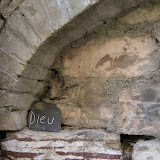
There’s a great deal to share about our trip but a highlight was the visit in Italy to Monte Subasio -- a few miles outside the walls of Assisi— where Francis (1181-1226) and his followers established their first home in caves on its slopes. Throughout his life, Francis apparently returned often to those graceful heights on foot (despite his many illnesses) to pray and contemplate (if so inclined, you can get a sense of the place here: http://www.sacred-destinations.com/italy/assisi-eremo-delle-carceri). A few of us chose to walk back down the mountain to our retreat house, Oasi Sacro Cuore. Now THAT is a walk that every person on the planet should experience. How does one describe the profound pleasure of being dwarfed by a landscape? The Umbrian valley spreads out as far as the eye can see, in beauty and abundance as melodic counterpoint to this rock, this foot, this olive tree, this specificity.
As Christians, we are taught that a similar sacred vastness lies within each of us — however difficult to comprehend-- in the form of our capacity to love. It seemed quite clear that the perspective and fecundity of this landscape, their home turf, deeply informed Francis and Clare in their ministries. At every bend in the road down that mountain, one could almost taste afresh the certainty with which they abandoned themselves to God. Although a photograph can’t begin to capture the nature of the experience, it’s impossible not to give you just a hint of it.

Blessings to you this day,
Gail
There’s a great deal to share about our trip but a highlight was the visit in Italy to Monte Subasio -- a few miles outside the walls of Assisi— where Francis (1181-1226) and his followers established their first home in caves on its slopes. Throughout his life, Francis apparently returned often to those graceful heights on foot (despite his many illnesses) to pray and contemplate (if so inclined, you can get a sense of the place here: http://www.sacred-destinations.com/italy/assisi-eremo-delle-carceri). A few of us chose to walk back down the mountain to our retreat house, Oasi Sacro Cuore. Now THAT is a walk that every person on the planet should experience. How does one describe the profound pleasure of being dwarfed by a landscape? The Umbrian valley spreads out as far as the eye can see, in beauty and abundance as melodic counterpoint to this rock, this foot, this olive tree, this specificity.
As Christians, we are taught that a similar sacred vastness lies within each of us — however difficult to comprehend-- in the form of our capacity to love. It seemed quite clear that the perspective and fecundity of this landscape, their home turf, deeply informed Francis and Clare in their ministries. At every bend in the road down that mountain, one could almost taste afresh the certainty with which they abandoned themselves to God. Although a photograph can’t begin to capture the nature of the experience, it’s impossible not to give you just a hint of it.
Blessings to you this day,
Gail
Thursday, August 19, 2010
Sunday, March 14, 2010
Return of the Prodigal Son, a Sermon

The Prodigal Son
The Rev. William Redfield
Trinity Episcopal Church, Fayetteville, NY
The Fourth Sunday of Lent—Year C—March 14, 2010
Luke 15:1-3, 11b-32
All the tax collectors and sinners were coming near to listen to Jesus. And the Pharisees and the scribes were grumbling and saying, "This fellow welcomes sinners and eats with them."
So Jesus told them this parable:
"There was a man who had two sons. The younger of them said to his father, 'Father, give me the share of the property that will belong to me.' So he divided his property between them. A few days later the younger son gathered all he had and traveled to a distant country, and there he squandered his property in dissolute living. When he had spent everything, a severe famine took place throughout that country, and he began to be in need. So he went and hired himself out to one of the citizens of that country, who sent him to his fields to feed the pigs. He would gladly have filled himself with the pods that the pigs were eating; and no one gave him anything. But when he came to himself he said, 'How many of my father's hired hands have bread enough and to spare, but here I am dying of hunger! I will get up and go to my father, and I will say to him, "Father, I have sinned against heaven and before you; I am no longer worthy to be called your son; treat me like one of your hired hands."' So he set off and went to his father. But while he was still far off, his father saw him and was filled with compassion; he ran and put his arms around him and kissed him. Then the son said to him, 'Father, I have sinned against heaven and before you; I am no longer worthy to be called your son.' But the father said to his slaves, 'Quickly, bring out a robe--the best one--and put it on him; put a ring on his finger and sandals on his feet. And get the fatted calf and kill it, and let us eat and celebrate; for this son of mine was dead and is alive again; he was lost and is found!' And they began to celebrate.
"Now his elder son was in the field; and when he came and approached the house, he heard music and dancing. He called one of the slaves and asked what was going on. He replied, 'Your brother has come, and your father has killed the fatted calf, because he has got him back safe and sound.' Then he became angry and refused to go in. His father came out and began to plead with him. But he answered his father, 'Listen! For all these years I have been working like a slave for you, and I have never disobeyed your command; yet you have never given me even a young goat so that I might celebrate with my friends. But when this son of yours came back, who has devoured your property with prostitutes, you killed the fatted calf for him!' Then the father said to him, 'Son, you are always with me, and all that is mine is yours. But we had to celebrate and rejoice, because this brother of yours was dead and has come to life; he was lost and has been found.'
Let me review the territory we have covered so far on our Lenten journey. We started out by leaving everything that was safe, comfortable, and predictable in order to seek out the desert wilderness. Out here we have not only been confronting the dangers around us (the world around us that threatens our very existence), but we have also been facing up to the demons within us. This started out on Ash Wednesday by our facing our own mortal existence and the reality that these lives of ours in this dimension have a beginning and an end.
But rather than leading to some sort of depressive morbidity, we are finding that, if we take this confrontation far enough and deep enough, it surprisingly leads to a greater freedom and lightness. It opens us up to a surprising sense of aliveness. Incredibly, those ashes on our foreheads turned out to be not signs of death, but signs of greater life!
In this journey we are also learning how important it is to let go. Our model, of course, is Jesus. Even as he has begun his own experience of suffering, in taking it all the way and in holding nothing back, whatever divine entitlement he might have tempted to cash in on and whatever very human fear he might have harbored have bloomed into a flowering of deeper love and compassion. He is living from that eternal wellspring of Spirit. Yes, he has hit the mother lode!
And then last week we began to see how the exercise of true forgiveness fits into this whole picture. This, too, is part of dying before you die. More than a path of moral uprightness, this is a way of intentionally and humbly stepping down from any presumed moral high ground. As we release the built up resentments and hurts of a lifetime, like Jesus, we become freer and lighter and able to love like he shows us. Eternal life flows into us and through us.
One of the methods I introduced last week in assisting us to move from conditional forgiveness to unconditional forgiveness involves stepping deliberately onto the level playing field of human life and entering into a more deeply shared life with the rest of humanity. One way we do this is by seeing that, as much as anyone else, we have fallen short of the mark ourselves.
And today in our Gospel reading the story of the Prodigal Son suggests another way to get to this real forgiveness—and that has to do with opening ourselves to the infinite yet unmerited love from the Father. When we open ourselves to the full realization that we are loved beyond measure, we begin to realize that it is no longer either important or necessary for us to count the costs. If God is not keeping score, it is pretty unreasonable for us to do so.
And so the story…
Although the parable has been called the story of the Prodigal Son, it is so much more the story of a father’s steadfast love (so perhaps it should be called the story of the Prodigal Father!). Told in a culture in which the father was the representative of the law, this father instead disregards his own rights and honor in favor of his enduring and uncompromising love for his two sons.
You have just heard the story. The younger son, feeling the ache to see and experience the big wide world out there, asks his father for his share of the inheritance. This, in that society, he is technically entitled to do. But it is then the duty of the sons to set aside enough in resources to provide for the father in his old age.
Well, the younger son spends the whole wad in riotous living and finds himself one day in the pits (literally as well as figuratively). Feeding pigs in a foreign country has got to be about as low as you can get for a Jew in those times. So he figures, even as a hired servant for his father, he could do a lot better.
But how will he be able to face the judgment and retribution of his father? How can he possibly soften his heart? The younger son begins to rehearse in his mind a repentant sounding story that might possibly open his father’s door.
But no story—rehearsed or otherwise—will be necessary. The father, it turns out, has been watching the road and waiting and longing—yearning, really—for his son’s return. And before he can even get to the property line, the father throws all dignity to the wind and runs out to meet his long lost son. Runs! No self-respecting elder in this society would surrender his dignity and run—unless, that is, his uncompromising love was bursting from his heart and so greatly overshadowed his need to preserve his own dignity.
Before the son can get a word out of his mouth to express his shame and remorse, the father throws his arms around his son and kisses him. Again, this behavior was very much out of character for an elder in such a patriarchal society. Stunned, the son tries to mutter a confession, but the father hardly seems to be paying attention. The father is much more interested in expressing the joy he feels in the son’s return. He calls for the finest robe (probably his own) and sandals for his son’s feet as a sign of his full restoration of honor back in the family. Then the party begins!
But here, as you know, is where the story gets juicy. The older son, who just happens to be working hard out in the field, hears the merrymaking and inquires of one of the servants what is going on. The report of the forgiven return of his self-serving little brother cuts like a knife into his heart. He cannot abide this gross unfairness. He shames his father by refusing to go in and join in the merrymaking. And when his father graciously comes out to explain the situation to him and to encourage him to join in, the older brother dishonors the father by insulting him.
Now many of us—especially the prodigals among us—might judge the older brother harshly. But before we think of this elder brother as a stuffy old stick-in-the-mud, let’s just think about it.
The younger brother has all but wished his father dead and expressed this by leaving with half of all the inheritance. This is the money that was supposed to take care of the father in his old age. That meant that the older brother had to care for the father out of his half of the inheritance. And now that the reckless younger brother has returned, he too must live off his older brother’s half since he has squandered his own.
Knowing the impetuousness of his younger son, one wonders why the father would have given him his share of the inheritance. He must have guessed his son would squander and lose it. He was certainly not obligated to give him his share at this time. It must be that the father valued his son’s freedom more than his own security. Or maybe security was of no real value for him at all.
All that is bad enough. But when the older brother sees the extent to which his father is celebrating the other son’s return and how quickly he has forgiven his brother’s grievous sins and reckless behavior, he is understandably upset. And the frosting on the cake is that the father is giving that profligate one the party that he has never given him, the dutiful one. The father has simply relied on him to always do the right thing without ever such a demonstration of acknowledgment or support—let alone a party.
At the very least, the older brother is looking for conditional forgiveness. He would at least have the younger brother pay back what he has lost and given some sort of provisional status in the family until this whole thing gets sorted out. He’s counting the costs, and he’s going to make him pay. But because the father’s love overshadows all other concerns, there will be no conditional forgiveness here; the father’s forgiveness is immediate and completely unconditional.
So here in this story we can see and identify with part of us that so often and egregiously screws up and misses the mark; we are, in other words, the profligate younger brother. Here too, though, we can also see and identify with the part of us that would prefer to stick to the moral high ground and express our self-righteousness in conditional forgiveness that would require some real conditions before reinstatement could place. This, of course, is the part of us that is constantly counting the costs and keeping score. Yup, we’ve got that part too.
Perhaps you had thought that the father in this story represents the unconditional love of God the Father. Maybe. But maybe that’s just the door to something deeper. Maybe the father presents the wellspring from which we too are invited to drink. Maybe the father is the picture of aliveness that reveals our essential nature when we are willing to take it all the way.
Take it all the way? Yes, maybe this route to the father’s unconditional love and unconditional forgiveness requires that we be willing to claim those profligate parts of ourselves as well as those self-righteous parts of ourselves.
Perhaps we never quite completely leave behind us the part of ourselves that is subject to the whims of self-indulgence and thinks it can get away with murder. Perhaps also we never completely leave behind the part of us that keeps drinking from the poisoned well of the need to be right and in control and takes refuge in some imagined moral high ground.
But maybe we are invited to take it all the way such that a deeper part of ourselves will refuse to get provoked or misdirected by our own waywardness, our own self-righteousness, or even our own self-judgment. You see, we are not forgiven because of our repentance. Nor are we justified by any dutiful obedience or hard work. The deeper part of ourselves knows that eternal life is not the denial of these parts of ourselves. It knows that these parts—the parts represented by the two sons—are only partial and conditional identities that are simply hiding our deeper identity in God.
And here’s the secret—once they are identified and claimed, they be seen for what they are—partial and conditional identities; they can be held more loosely; and gradually over the course of a lifetime, they can be let go of. This is precisely what delivers us to an existence that is both freer and lighter.
Indeed, three weeks from now this will be the resurrected life we will be claiming and celebrating. But just to give us an advanced peek—this will not just be the resurrected life of Christ. I suppose that might be miracle enough. But it will go beyond even that. We will be celebrating and claiming our own resurrected life, and it is here prefigured in this story and seen in the person of the father.
We are being invited to drink from the eternal wellspring of divine love. And as the father in the story illuminates, the nature of this love is that it is always being given away—whether it is recognized or not, whether it is responded to or not. Neither our own foolhardiness (represented by the younger son) nor our own self-righteousness (represented by the older) can stifle or suppress it.
Thanks be to God!
Thursday, December 24, 2009
Peace on Earth

And to celebrate the season:
I arise today
Through the strength of Heaven
Light of sun
Radiance of moon
Splendour of fire
Speed of lightning
Swiftness of wind
Depth of the sea
Stability of earth
Firmness of rock
I arise today
Through God’s strength to pilot me
God’s eye to look before me
God’s Wisdom to guide me
God’s way to lie before me
God’s shield to protect me
From all who shall wish me ill
Afar and anear
Alone and in a multitude
Against every cruel
Merciless power
That may oppose my body and soul
Christ with me, Christ before me,
Christ behind me, Christ in me,
Christ beneath me, Christ above me,
Christ on my right, Christ on my left,
Christ when I lie down, Christ when I sit down,
Christ when I arise, Christ to shield me
Christ in the heart of everyone who thinks of me,
Christ in the mouth of everyone who speaks of me
I arise today.
Tuesday, December 1, 2009
The Days Are Surely Coming...

The Days Are Surely Coming…
The Rev. William C. Redfield
Trinity Episcopal Church, Fayetteville, NY
The First Sunday of Advent—Year C—November 29, 2009
Three weeks ago for our confirmation class I showed a 20-minute You-Tube clip of Jill Bolte Taylor and her very personal description and lucid explanation of a stroke that she had survived several years ago. A Harvard-trained and published neuroanatomist, she watched her mind completely deteriorate to the point where she could not walk, talk, read, write, or recall any of her life. Fortunately, because of excellent medical care and the loving support from her family, she survived. (You can see her short account by going to You Tube and writing in, “stoke of insight.”)
Jill Bolte Taylor has now written about her experience in My Stroke of Insight: A Brain Scientist's Personal Journey. There, beyond just telling her story in vivid detail, she also shares the insight she gained into the unique functions of the right and left halves of her brain. You see, during her stroke Jill lost the categorizing, organizing, describing, judging and critically analyzing skills of her left-brain. Along with its language centers and her ego center, her left-brain became disengaged. Thus, during her stroke her consciousness shifted away from her normal, everyday ways of seeing and evaluating things. In the absence of her left brain’s dominance, her right brain had the opportunity to become fully engaged, and her consciousness shifted into full present moment awareness, whereby she experienced herself “at one with the universe.”
This kind of language links us to the realm of religious experience and spiritual transformation. And while it doesn’t necessarily mean that spiritual awareness can be explained away by brain function, it does perhaps give us a greater understanding of these two types of thinking and awareness in our own minds. And it does, in other words, remind us of that ever present dividing line between two very different ways of understanding our life in this world—the deliberate focus of the left brain which would have us operate out of a rational and linear understanding of life, and the right brain awareness which senses and intuits things in timeless intensity and opens us up to our inherent connection with the divine.
This, I believe, is the same line that runs through our Christian tradition and separates the more obvious and institutional and historical expression of our faith tradition from the more hidden, mysterious, and contemplative part. Jesus, as the founder of our faith, seemed equally balanced between these two halves of life. While he lived in the world and fully accepted the frailty of his human condition and marched inexorably in time toward his fate in Jerusalem, he also lived in full, deep, and timeless communion with God the Father. In other words, while living fully on the horizontal axis of life, he also and simultaneously lived fully on the vertical axis of life. The way our tradition expresses this is that Jesus was fully human and fully divine.
In the early decades of the young church there seemed to be an effort to express both sides of this equation in the tradition, although some groups and communities expressed one side more than the other. Some groups emphasized a coherent and rational belief structure that would further the institution of the church and bring faith and belief into greater uniformity. Other communities, on the other hand, were more engaged in the mystical side. But in those early years there seemed ample room for various expressions of faith in Jesus without one side having to defend its existence at the cost of eliminating a side that understood things a little differently. Consequently, one could speak more truthfully about various and complimentary Christianities rather than one uniform and thoroughly defined Christianity.
But that all began to change when certain church leaders grew more intent on building uniformity instead of unity. This gradual shift toward getting all Christians in line with one another was accelerated in the fourth century with the dramatic growth of the Church and its acceptance as the state religion of the Empire. More and more the Church became entwined with the State and more and more involved in the worldly issues of power and control. Over time the leaders of the Church became convinced that in order to continue to flourish and succeed, there must be greater uniformity of belief and practice. Sometimes violently, sometimes brutally, the Church at that time rooted out minority opinions and practices in order that the dominion of Christendom could prevail. The minority opinions were then pronounced heretical, and these parts of our tradition were thoroughly and sometimes viciously rooted out.
If we make the analogy of brain physiology, we might say that the Church’s left-brain accomplished full domination of its right brain in order to do what it thought it needed to do to survive. But this “survival” was only the limited vision of what the organizational side of the church with its own resources could conceptualize. The left-brain had dominated. But what was worse, it cut off its mystical side to its own great detriment. It didn’t and couldn’t see the full picture because what it was destroying held the other half of the equation of fullness and wholeness.
I mentioned heresy. Heresy is the term given to the loser of a theological and doctrinal conflict. Orthodoxy, on the other hand, is the term we give to the winner. The problem was that the Church at this time didn’t just consolidate the faith (for that might have been a very legitimate undertaking); rather it set out on a trajectory of power and control in order to extend its influence far and wide. Would this be considered the call of Christ? Is the job of Christianity to convert the rest of the world? These are good questions, but they are hard questions. The institutional and left brain side of our tradition might answer them one way, while the mystical and right brain side might answer them another way.
*
OK, enough with brain physiology and function and the development of the church doctrines of orthodoxy and heresy. It’s Advent—thank God—and a time to wait and watch and pray. As the long season of Pentecost has come to a close and the season of Advent has commenced, the Scripture lessons turn to the end of time and the ultimate and final coming of Christ. And so we might think that what we are watching and waiting for is something that is about to take place in time. It seems that we are invited and encouraged to wait and watch for something that future time will deliver.
Oh dear, I’m sorry. I need to go back for a minute to brain physiology and function. Remember, the left-brain operates linearly—that is, it sees the life through the unfolding of the sequential movement of time. It goes from the past to the present to the future. So much are we immersed and even controlled by our left-brain thinking that we don’t even question that. We think that that’s simply the way life moves—through time. Scriptural tradition calls this chronological time or chronos.
But we must remember that there is another, perhaps deeper way of understanding life’s unfolding, and it is measured, not in terms of the linear march of time, but in terms of developmental readiness or kairos. It is only our right brain that can grasp this wondrous sense. Instead of moving laterally across the horizontal dimension of life, the kairos trajectory of life moves toward depth.
So, what are we waiting for in Advent? Are we looking for something to happen in future time? Or, are we looking for the unfolding of meaning in terms of readiness, ripeness, or depth? Well, of course, we mean both. When we say “thy kingdom come,” we mean that the Reign of God that will come in both time and in depth. The kingdom, Jesus said, is around you, but it is also inside you.
Perhaps the best unifying metaphor for this complex reality is pregnancy—which is what this season of Advent is really all about. When a woman is pregnant, she is more than a little aware of her baby’s full term—the nine long months her body will experience these dramatic changes. Because of all of the difficult and demanding bodily changes, most women I know can’t wait for those nine months to be over and done. But at the same time, the movement through pregnancy can at the same time be experienced as something moving toward ripeness and fruition—something that cannot be grasped or measured only by time. There is another scale altogether on which something is forming and building and deepening. And, yes, it takes the full nine months, but there is something timeless in this as well.
*
My dear friends: These are the awe-filled days of Advent. We are called to watch and watch and pray. But that for which we wait, watch, and pray is not only coming in time; it is also coming in depth and fruition. The story highlights one woman—Mary—who is to give birth to a special son. Instead of getting all tied up in historical accuracy of this truth, we must remember that its meaning is also timeless. And rather than just something we think about having happened in time way back when, its truth is both timeless and unconstrained. Simply stated, there is a divine movement toward depth and fruition, and it has to do with you, and it has to do with what is happening in you right now, in the ripeness of this present moment. More than life in just Mary’s womb, there is something growing and forming in you—in the womb of your heart. Never mind how irrational that may sound. Even if your mind cannot grasp it, your heart can. This is the call of Advent.
And so we are called to live the full life of historical time (or chronos) as well as the timelessness of eternity (or kairos). We are perched at the point of the cross—the cross that brings together the horizontal axis with the vertical axis. We need both kinds of understanding. The trick is to stay soft and flexible and open. The trick also is to stay awake and present in the moment. But know beyond all doubt that there is a something stirring in the depths. There is something groaning to come to fruition and be born. And it has everything to do with you.
Wait, watch, and pray. Preparation and readiness are imperative. But the time is now.
Thursday, October 29, 2009
The Benedictine Rule of Life

Some words don’t age well. While they may once have been acceptable, even foundational, they are now laden with associations that require us to approach them apologetically. We utter certain words with defensive explanations because of the negative connections that people associate with them. Mention the core Benedictine value of humility and be ready to provide a spirited justification to show that humility doesn’t celebrate groveling or cringing behavior and that it is a most remote cousin to humiliation. In a culture of multi-tasking across nano-seconds, patience is a bit suspect and waiting a thing to be avoided.
Though we study The Rule of St. Benedict, rule is a tricky term for modern non-monastic people. The old monastic rule is one thing, but it gets trickier when we consider a working rule for our own lives. In a discussion with the Benedictine spiritual community at the Washington National Cathedral, a participant said she hadn’t made much progress creating a rule of life, partly because she associates rules with things she shouldn’t do.
A more promising way to start might be to think of the activities, places and practices that make us feel more possible, more at home, more knit into our own place in the web of creation. A rule of life should be built around such elements. A rule can provide advance permission to do what we most want and need to do. If we are to become more human and whole when we spend a silent evening with the dog or reading a great book, we should give that activity a respected place in our rule of life. This may sound self-indulgent, but if an activity helps us find our place in a loving universe, we should not trivialize by calling it an escape from the real challenges of living. Benedictine balance will ensure that we won’t spend all day sitting in our favorite arm chair!
What of the unhealthy and unhelpful things we wish we didn’t spend so much time on? Rather than rule them away with prohibitions, we might diminish their place in our lives by more fully embracing the things that are life-giving. Smokers have greater success quitting when they increase the role of exercise in their lives. Working only on not doing something is much more arduous.
St. Benedict teaches that a balance of prayer, work, study, recreation and hospitality are the best practices for most people, but his Rule is filled with exceptions and nuances that recognize our unique individuality. Hospitality for a raging extrovert might mean setting out a groaning buffet table for friends once every ten days. For someone more introverted, hospitality could mean engaging in a brief but genuine encounter with the grocery clerk or a homeless man. The other practices have similar levels of variation. Recreation includes the jogging trail and the sofa, though it needs to be free of striving or scoring; as empty of purpose as our work life is full of purpose. I play tennis regularly, with effort and score-keeping, but I almost immediately forget who won and don’t much care, otherwise it would a form of unpaid work not recreation.
The elements of Benedict’s Rule are enhanced by their interconnections. A Study in the Harvard Business Review shows that when work teams took predictable time off during every work week (and this had to be forced on many in the study), they worked more effectively within teams, communicated better, and planned and streamlined their work. A time of honest toil enhances the rest or recreation that follows it. The interconnections between prayer and study each deepen the other. The great contemplatives like Thomas Merton attended scheduled times of corporate worship, but it is unclear exactly when their prayer began or ended. In living under a rule for a long time, it may be that the rule’s elements gradually merge with one another.
If nothing else, writing a rule of life can be a way of learning more about what lifts our ordinary lives out of rote action, humorless drudgery or pointless accumulation. A rule can direct us to where the music is playing in the lives we’re already living.
In peace
– Tim Carrington
Tim Carrington is the Chairman of the Board of The Friends of St.
Benedict, 5150 Macomb Street NW, Washington, DC 20016, and the above article
will appear in the Fall issue of Regula, the Friends newsletter, coming out in November.
More information is at www.benedictfriend.org.
Subscribe to:
Posts (Atom)